Best Expandable Garden Hose 2026: Top 7 Picks Compared
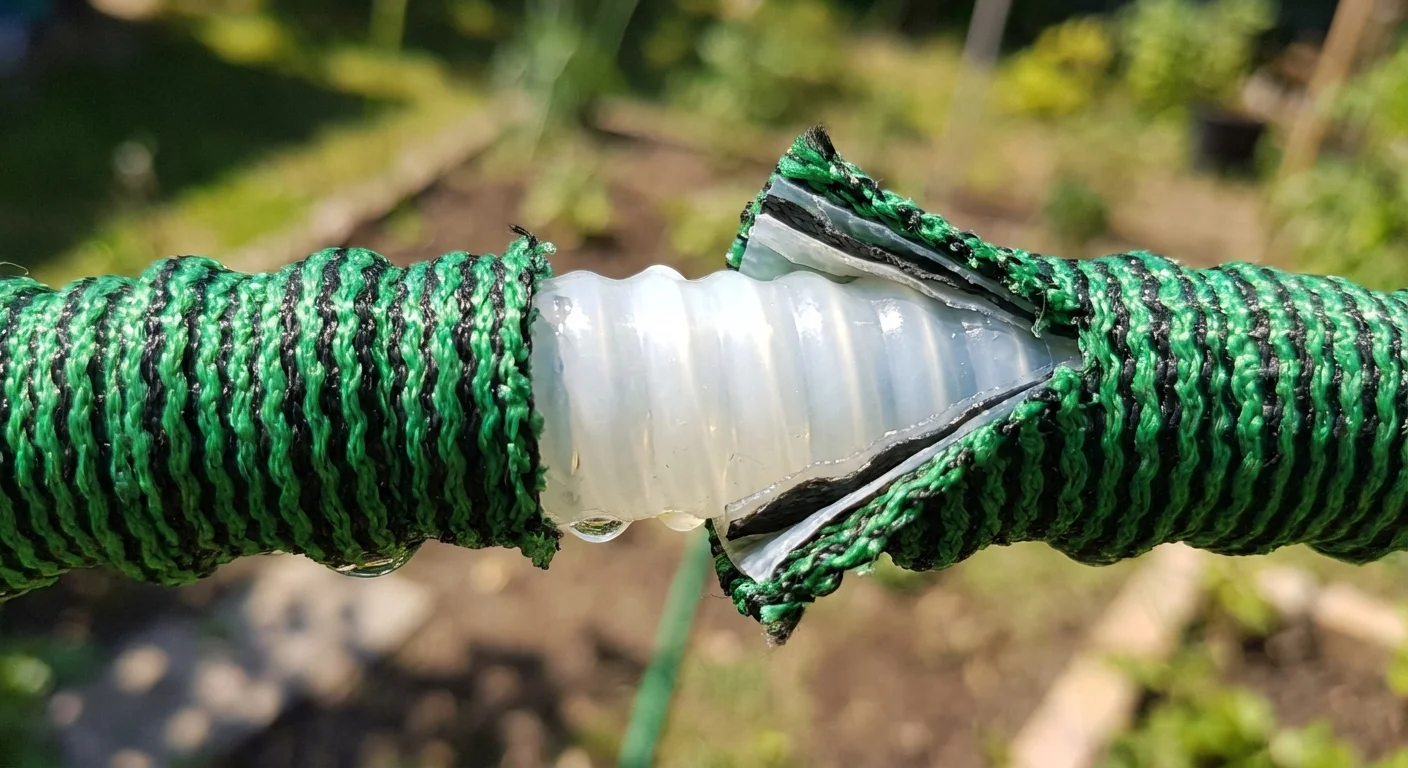
Close-Up Details
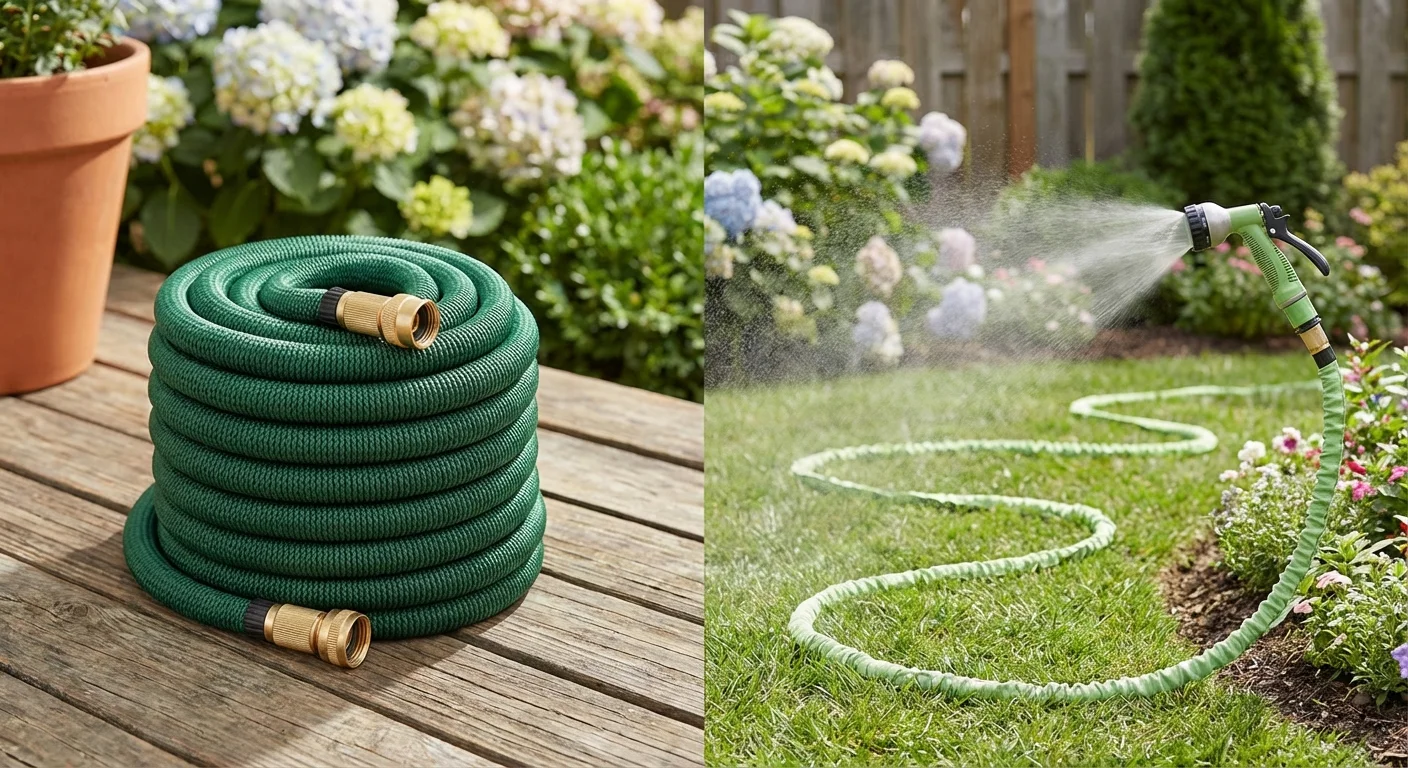
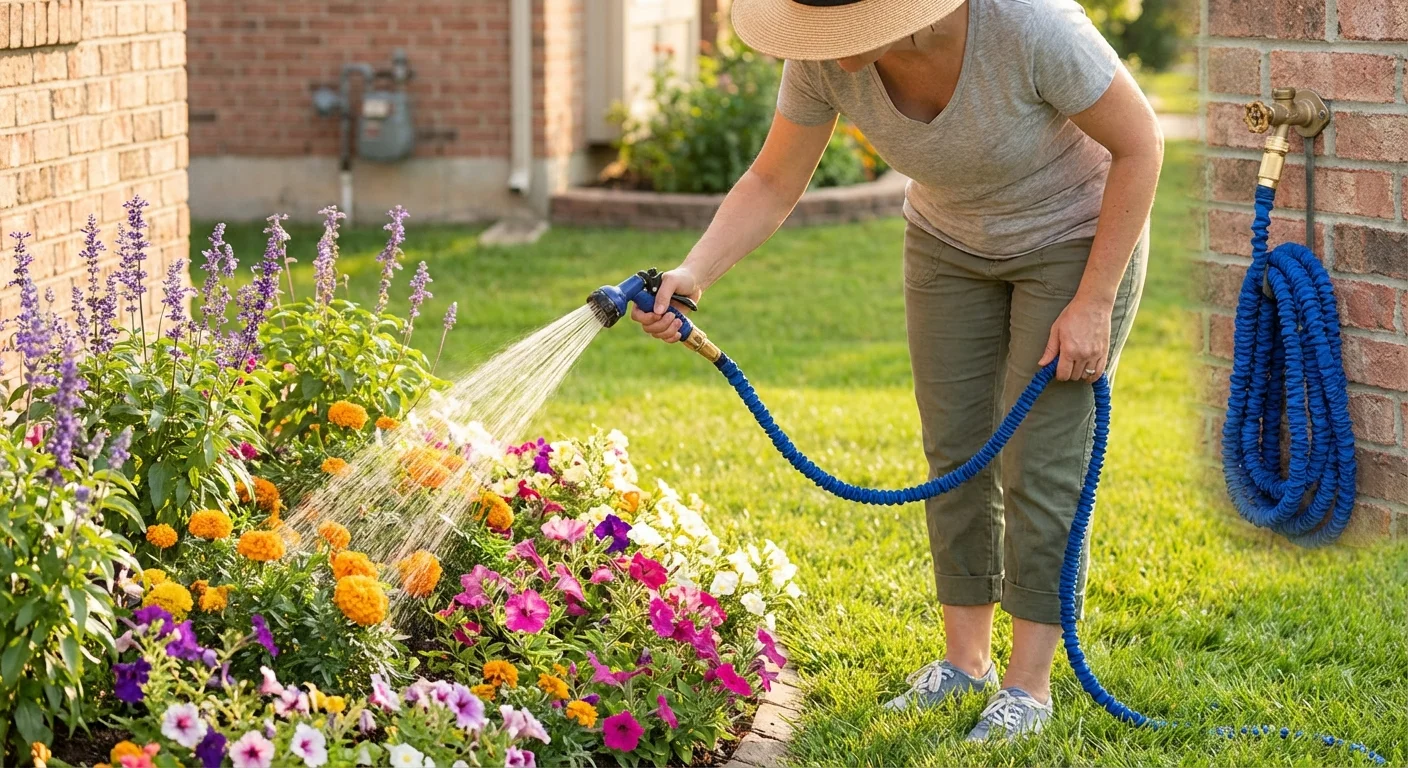
In Action
About the Author: James Whitmore is a Certified Master Gardener with about 18 years of gardening experience and a certificate in Sustainable Horticulture. Evaluation criteria are informed by general guidance from the Cooperative Extension System, the national network of research-based agricultural education programs.
If you’ve ever wrestled a heavy rubber hose across your yard, you already understand the appeal of expandable garden hoses. They’re lightweight, compact, and — when they work — genuinely life-changing. The problem? Not all of them do work.
The expandable hose category has matured considerably. Many early models had a reputation for bursting at the seams. What’s left in 2026 is a surprisingly capable lineup, if you know which ones to buy.
Based on manufacturer specs and published materials, here are seven expandable hoses worth a look.
🔬 How We Evaluate Garden Tools
We compare each hose on published core construction, fitting material, length options, weight, and warranty terms from the maker. Prices change, so check the current listing. We do not accept free samples in exchange for positive coverage.
What Is an Expandable Garden Hose?
An expandable hose uses a double-layer design: a latex — natural latex is rated for far greater elongation cycles than TPE or PVC, which is why double-layer latex core hoses outlast single-layer models in field use or TPC inner tube surrounded by a woven fabric outer shell. When water pressure fills the inner tube, the hose expands to its full length — typically 3x its resting size. Turn off the water, and it contracts back down for storage.
The result is a hose that weighs a fraction of a traditional rubber hose, doesn’t kink, and fits in a small bag when not in use.
Pro Tip: Expandable hoses work best with water pressure between 40–70 PSI. If your home pressure is below 40 PSI, the hose won’t fully expand. Above 80 PSI, you risk premature bursting — install a pressure regulator.
How we compare
🛒 Recommended Products
Flexi Hose 50ft Expandable:
ATEROD 50ft Expandable Hose:
TheFitLife 75ft Expandable:
Giraffe Tools 100ft Expandable:
Shop Expandable Garden Hoses on Amazon:
Each hose is compared across five categories:
- Durability: core layers, outer fabric, and fitting material as published
- Expansion/Contraction — How fully and quickly they expand and retract
- Flow: maker flow notes where published
- Fittings Quality — Brass vs. plastic, leak resistance, thread compatibility
- Storage & Weight — Collapsed size and portability
Top 7 Best Expandable Garden Hoses for 2026
1. Flexi Hose Expandable Garden Hose — Best Overall
Length Options: 50 ft, 75 ft, 100 ft
Fitting Material: Solid brass
Inner Tube: Triple-layer latex
Weight (50 ft): 2.8 lbs
The Flexi Hose has been a category leader for years, and the 2026 version refines what was already a strong product. Flexi lists a triple-layer latex core and solid brass fittings, a sturdier combination than the double-layer cores and aluminum fittings further down this list.
Expect less flow than a standard 5/8-inch rubber hose. For garden watering, car washing, and deck cleaning, that is usually adequate. For filling a pool? Get a regular hose.
Pros: Triple-layer latex core, solid brass fittings
Cons: Slightly heavier than ultra-budget options
Pro Tip: Always drain the Flexi Hose completely before storing. Residual water left inside during freezing temperatures will destroy the latex core — this applies to every expandable hose, not just this one. Check our winterization guide for the full process.
2. TBI Pro Expandable Garden Hose — Best Durability
Length Options: 50 ft, 75 ft, 100 ft
Fitting Material: Solid brass with rubber washer
Inner Tube: Triple-layer latex
Weight (50 ft): 3.1 lbs
The TBI Pro pairs a triple-layer latex core with solid brass fittings that include an integrated on/off valve, a small feature that saves you a trip to the spigot every time you need to pause.
Pros: Triple-layer latex core, built-in shutoff valve, brass fittings
Cons: Heavier than average (3.1 lbs at 50 ft)
3. Lefree Expandable Garden Hose — Best Value
Length Options: 25 ft, 50 ft, 75 ft, 100 ft
Fitting Material: Solid brass
Inner Tube: Double-layer latex
Weight (50 ft): 2.4 lbs
The Lefree sits in a lower price tier than the top picks. Its double-layer latex core is the weak point, since double-layer cores generally wear out sooner than triple-layer ones. But if you’re budget-conscious or only water seasonally, it’s hard to beat.
It includes a 10-pattern spray nozzle, so you may not need to buy one separately.
Pros: Lower price tier, bundled 10-pattern nozzle, light at 2.4 lbs (50 ft)
Cons: Double-layer core won’t last as long as a triple-layer core
Pro Tip: Pair any expandable hose with a quality nozzle for the best experience. A good nozzle compensates for the lower flow rate. See our guide on garden hose hacks for more ways to get the most out of your setup.
4. Beaulife Heavy-Duty Expandable Hose — Best for Large Yards
Length Options: 75 ft, 100 ft, 150 ft
Fitting Material: Solid brass
Inner Tube: Triple-layer TPC (thermoplastic copolyester)
Weight (100 ft): 4.8 lbs
If you need to reach every corner of a large property, the Beaulife is one of the few expandable hoses offered at 150 ft. The TPC inner tube (instead of latex) handles higher temperatures and resists UV degradation better.
Longer expandable hoses deliver less flow, so the 150 ft length suits watering better than washing. If you’re debating between this and a hose reel cart with a traditional hose, the cart wins for heavy-duty use. The Beaulife wins for portability.
Pros: Available in 150 ft, TPC core for heat resistance, solid fittings
Cons: Pressure drop at max length, premium price
5. Aterod 75ft Expandable Garden Hose — Best Mid-Range
Length Options: 50 ft, 75 ft
Fitting Material: Solid brass
Inner Tube: Triple-layer latex
Weight (50 ft): 2.6 lbs
The Aterod sits in a comfortable middle ground: better build quality than budget picks, lower price than premium options. The 75-ft model is particularly well-suited for average suburban yards where a 50-foot hose might come up short but 100 feet is overkill.
Pros: Balanced price/quality, good for mid-size yards
Cons: Limited length options, no 100-ft model
6. Pocket Hose Silver Bullet — Best As-Seen-on-TV Option
Length Options: 25 ft, 50 ft, 75 ft, 100 ft
Fitting Material: Aluminum (branded as “bullet-proof”)
Inner Tube: Double-layer latex
Weight (50 ft): 2.2 lbs
Yes, it’s the one from the infomercial. And honestly? It’s not bad. The Pocket Hose Silver Bullet won’t win any durability awards — the aluminum fittings will corrode faster than brass, and the double-layer core has a limited lifespan. But it’s widely available, inexpensive, and performs adequately for light-duty use.
If you water container plants on a patio and need something ultra-compact, this gets the job done. For anything more demanding, look higher on this list.
Pros: Ultra-lightweight, very compact storage, widely available
Cons: Aluminum fittings corrode, shorter lifespan, lower flow rate
7. TheFitLife Expandable Garden Hose — Best Fabric Durability
Length Options: 25 ft, 50 ft, 75 ft, 100 ft
Fitting Material: Solid brass
Inner Tube: Triple-layer latex
Weight (50 ft): 3.0 lbs
TheFitLife uses a double-woven outer fabric that’s noticeably more abrasion-resistant than single-layer competitors. If you’re constantly dragging your hose across concrete, pavers, or gravel, this matters. The inner core is standard triple-layer latex, so durability is on par with top picks.
The downside is that the thicker fabric can slow retraction. Minor trade-off for the added protection.
Pros: Superior fabric durability, brass fittings, good flow rate
Cons: Slower retraction, slightly bulkier when stored
Expandable Hose Comparison Table
| Hose | Best For | Length Options | Fittings | Core | Weight (50ft) |
|---|---|---|---|---|---|
| Flexi Hose | Overall | 50 to 100 ft | Brass | Triple latex | 2.8 lbs |
| TBI Pro | Durability | 50 to 100 ft | Brass | Triple latex | 3.1 lbs |
| Lefree | Value | 25 to 100 ft | Brass | Double latex | 2.4 lbs |
| Beaulife | Large yards | 75 to 150 ft | Brass | Triple TPC | 4.8 lbs* |
| Aterod | Mid-range | 50 to 75 ft | Brass | Triple latex | 2.6 lbs |
| Pocket Hose | Lightweight | 25 to 100 ft | Aluminum | Double latex | 2.2 lbs |
| TheFitLife | Fabric | 25 to 100 ft | Brass | Triple latex | 3.0 lbs |
*100 ft weight shown for Beaulife
Expandable Hose vs. Traditional Garden Hose
The question isn’t which type is “better” — it’s which fits your use case:
Choose an expandable hose if you:
– Have limited storage space
– Water container gardens or small-to-medium lawns
– Hate dealing with kinks and tangles
– Want something lightweight enough for elderly users or kids
Stick with a traditional hose if you:
– Need maximum water pressure and flow rate
– Run sprinklers or pressure washers regularly
– Leave hoses connected year-round
– Have a retractable hose reel already installed
For more on managing traditional hoses, see our comparison of retractable vs wall mount vs cart hose reels.
How to Make Your Expandable Hose Last
Most expandable hose failures are user error, not product defects. Follow these rules:
- Never leave it pressurized. Turn off the spigot when not in use. Constant pressure fatigues the latex core.
- Drain before storing. Water left inside promotes mold and, in winter, ice damage.
- Keep it out of direct sun. UV destroys latex. Store in shade or a bag.
- Don’t drag across sharp edges. The fabric is tough but not indestructible.
- Use a pressure regulator if your home water pressure exceeds 70 PSI.
Pro Tip: Hang your expandable hose on a simple wall hook near the spigot — no reel needed. For hose storage ideas without a reel, check out our guide on how to store a garden hose without a reel.
📌 Related: Best Retractable Hose Reels → | Best Garden Hose Nozzles → | Garden Hose Hacks →
Related Reading: Best Lawn Mower 2026: Push, Self-Propelled & Robot Picks
Related Reading
Frequently Asked Questions
How long do expandable garden hoses last?
With proper care, a quality expandable hose with a triple-layer latex or TPC core lasts 3–5 seasons. Budget models with double-layer cores typically last 1–3 seasons. The most common failure point is the inner tube, which weakens from UV exposure, freezing temperatures, and being left under constant pressure.
Can you use an expandable hose with a pressure washer?
No. Expandable hoses cannot handle the high-pressure output of a pressure washer. They’re designed for standard garden use at 40–80 PSI. Using one with a pressure washer will burst the inner tube. Use a standard rubber hose rated for your washer’s PSI requirements.
Do expandable hoses work with hose reels?
They can, but it defeats the purpose. Expandable hoses are designed to self-compact — they don’t need a reel. If you want a reel-based solution, a traditional hose with a retractable hose reel or wall-mounted reel is a better choice.
Are expandable hoses safe for drinking water?
Most are not certified as drinking-water safe. The latex and fabric materials may contain chemicals not rated for potable water. If you need a hose for filling pet bowls, kiddie pools, or drinking, buy one specifically labeled as lead-free and drinking-water safe (NSF/ANSI 61 certified).
What’s the best length for an expandable hose?
Measure the farthest point from your spigot and add 10 feet. For most suburban yards, 50–75 feet is ideal. Going longer than you need reduces water pressure — a 100-ft expandable hose delivers noticeably less flow than a 50-ft one. See our guide on choosing the right hose length for detailed calculations.
Can expandable hoses handle hot water?
Most latex-core hoses max out around 113°F (45°C). TPC-core hoses like the Beaulife handle temperatures up to 140°F (60°C). Never connect an expandable hose to a hot water supply unless the manufacturer explicitly rates it for that temperature.
The Bottom Line
The Flexi Hose is our top pick for 2026: it balances core construction, fittings, and value on published specs. If budget matters, the Lefree punches well above its price point. And if you need serious reach, the Beaulife 150-ft is one of the few expandable hoses offered at that length.
Whatever you choose, remember that expandable hoses require slightly more care than traditional rubber hoses. Drain them, store them properly, and keep them out of the sun, and they’ll reward you with seasons of kink-free, lightweight watering.
James Whitmore is a Certified Master Gardener with about 18 years of gardening experience and a certificate in Sustainable Horticulture.
Source: University of Florida IFAS Extension on garden hose safety — UF IFAS Extension resources