How to Winterize a Hose Reel (Drain & Store)
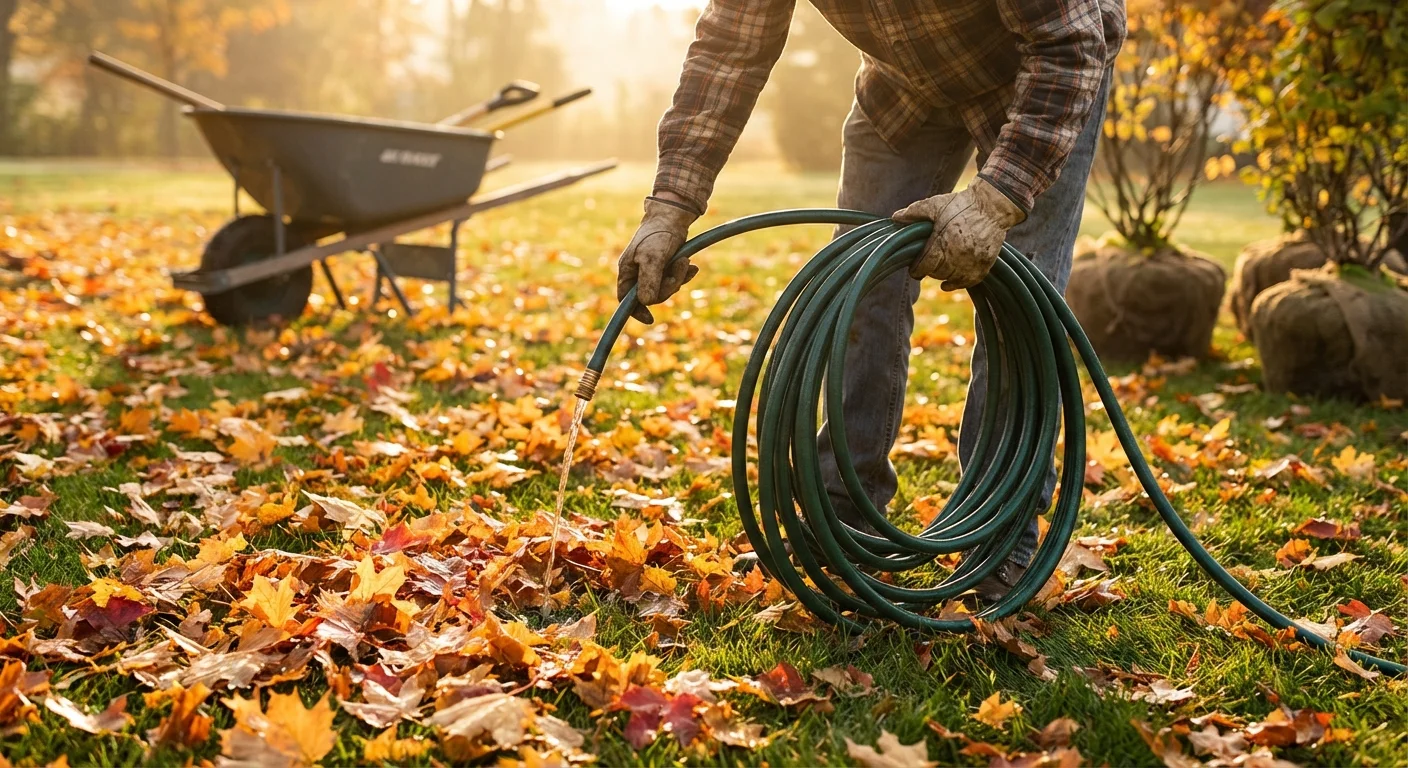
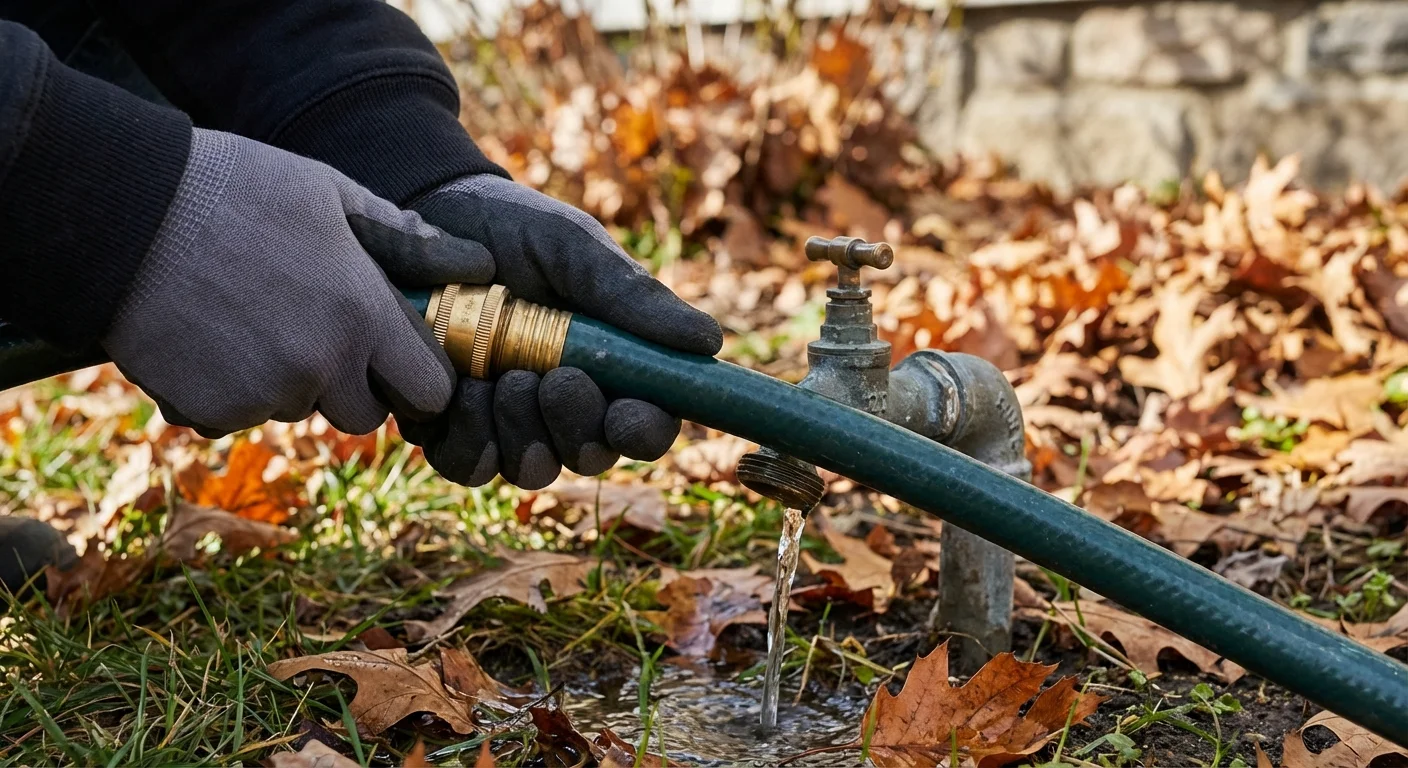
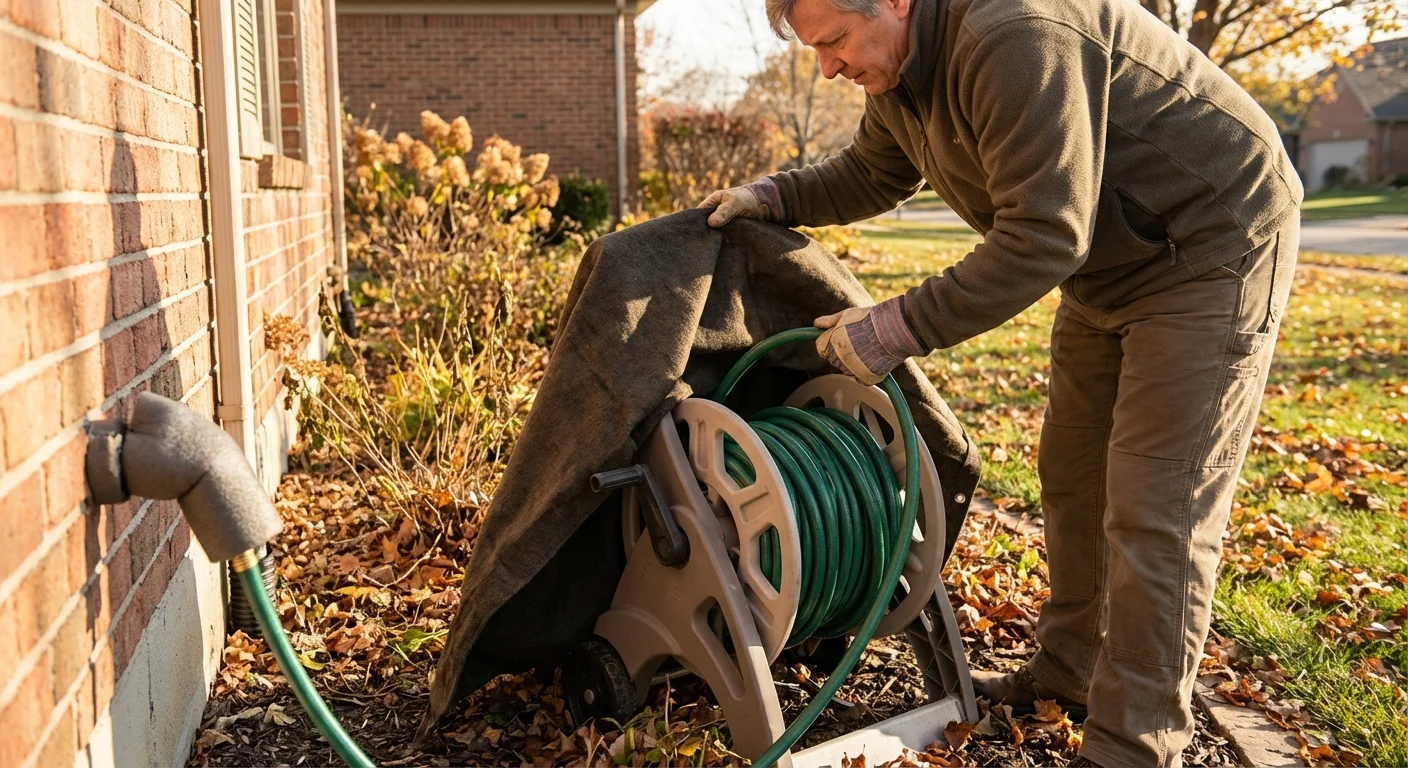
Winterizing a hose reel means disconnecting the supply, fully draining the hose and reel housing, clearing fittings, and storing the unit dry and off the ground so freeze expansion does not crack the drum or hose. Follow your maker’s drain steps for your model. This guide covers the shared checklist and links to storage and repair guides.
Why winterize a hose reel before freeze season
A hose reel is built to hold water under pressure in summer. It is not built to hold standing water through a hard freeze. Water expands as it freezes, and water trapped in a closed part has nowhere to go.
The makers say this plainly. Suncast says trapped water that freezes can damage the reel, the hose, “and even your pipes.” Eley’s freeze damage guide (eleyhosereels.com/pages/winter-freeze-damage) says some of its products are freeze-resistant but not freeze-proof, and that its 10-year warranty excludes damage from freezing. A cracked swivel in April is an avoidable repair bill.
Retractable reels need the most attention. Most of the hose sits inside a housing, so leftover water is easy to miss. Manual wall mounts and carts have fewer hidden loops, but a full hose or a wet inlet fails the same way.
When to do it: before the first freeze in your local forecast, not on a fixed date. Use the National Weather Service winter safety page and your local forecast. Eley’s own trigger, in its winterizing guide, is a forecast of 32°F (0°C) or below.
Tools and materials checklist
You need very little:
- A bucket or towel to catch drips at the faucet and fittings
- A clean, damp cloth for the hose and casing (no harsh chemicals; Giraffe Tools and Hoselink both say so)
- Spare hose washers or O-rings, if your old ones are flat or cracked
- A dry indoor spot that stays above freezing, or a fitted cover if the reel must stay outside
- Your reel’s manual (most makers post it on their support pages)
Skip the antifreeze. Giraffe Tools advises against it because it can corrode internal parts at the water inlet and outlet.
Step-by-step: disconnect, drain, clear fittings
- Shut off the water. Close the outdoor faucet. If your house has an interior shutoff for outdoor faucets, close that too and follow your home’s plumbing instructions for draining the line.
- Release the pressure. Open the nozzle until flow stops. Hoselink’s Evolve manual says to release pressure from the spray end before storing the reel. Point the spray away from steps and walks that can ice overnight.
- Disconnect at the faucet. Detach the leader (inlet) hose and catch drips. A hose left on the spigot can trap water at the faucet.
- Remove every attachment. Take off nozzles, timers, splitters, and quick-connects so each one drains on its own. Eley notes that its brass nozzle can hold water until the valve is opened, and its splitter can hold water above the bottom cap until the cap is removed. Check your own accessories for the same trap.
- Pull the hose all the way out. Lay it flat or downhill from the reel. Eley’s guide warns against routing the hose uphill and says to straighten kinks so water can run out.
- Let gravity work. Keep the open end lower than the reel. Lift low spots in sequence so water moves toward the outlet. Small pockets freeze the same way large ones do, so give it time.
- Clear the inlet and swivel. Eley calls the brass swivel the part most likely to fail in a freeze. Its steps: rewind slowly while the hose drains, park the curved part of the swivel pointing up, and, as an extra precaution, blow through the disconnected inlet hose to push water out of the swivel.
- Retract or rewind only when empty. Guide the hose back in slowly and wipe grit off as it goes. Giraffe Tools says a hose that retracts unassisted can jam, and Hoselink says to always walk the hose back in.
- Check washers while things are apart. Replace brittle or flattened washers now so spring hookup does not leak.
Do not use compressed air unless your reel’s maker gives a procedure and pressure limit for that model. Uncontrolled pressure can harm seals and internal parts.
Retractable vs wall-mount: what the makers say
Drain steps overlap, but storage advice differs by maker and model. Check your own manual. Here is what each maker in the table below publishes on its own site:
- Hoselink (retractable, Evolve series manual): in frost-prone areas, release pressure, disconnect, and store the reel inside. Do not unscrew the case, because it holds a tensioned spring. Source: Hoselink Evolve instruction manual (hoselink.com). Hoselink support also recommends draining the reel and watering accessories for winter storage (hoselink.com product support).
- Giraffe Tools (retractable): turn off and disconnect, release pressure, drain thoroughly, retract slowly, then take the reel down and store it indoors somewhere dry. Before spring use, check for ice and wait for it to melt. Giraffe Tools winter guide.
- Gardena (RollUp hose boxes): empty the hose completely. The box may stay outside through winter only in a depressurized state. The box must not be opened (prestressed spring). Gardena RollUp operator’s manual.
- Suncast (hose reels and Hideaway units): drain before freezing temperatures and store the whole unit, reel and hose, in a garage or shed that stays above freezing. Suncast FAQ. A Suncast reel manual adds: if the reel must stay out in freezing conditions, disconnect it and drain all water from hose and reel.
- Eley (wall-mount and cart reels): gravity drain, clear the swivel, then either leave the drained reel in place or move it to heated storage. Portable reels roll indoors; wall and post units come off their mounts first. Source: Eley winterizing guide (eleyhosereels.com).
- AMES: drain the hose and reel completely and store indoors for winter. AMES FAQ.
- VEVOR (retractable): during freezing months, drain the hose and store it inside. VEVOR hose reel guide.
The pattern is clear. Retractables mostly want to come inside, and nobody wants you opening a spring housing. Some wall-mount designs may stay outdoors, but only after a full drain.
Freeze-prep drain checklist by reel type
Print this or keep it on your phone. One row per reel you own.
| Step | Retractable (wall or post) | Manual wall mount | Cart or freestanding |
|---|---|---|---|
| 1. Shut off and release pressure | Faucet off, nozzle open until flow stops | Same | Same |
| 2. Disconnect | Leader hose off the faucet; remove nozzle and accessories | Inlet hose off; remove nozzle, splitter, timer | Feeder hose off; remove nozzle and accessories |
| 3. Drain the hose | Pull out fully, flat or downhill, lift low spots | Unwind fully, flat or downhill | Unwind fully, downhill if possible |
| 4. Drain the housing or swivel | Hold the reel so water exits the inlet; never open the case | Swivel up, then clear the inlet per maker (Eley: blow through inlet hose) | Clear the inlet and swivel per maker |
| 5. Rewind | Walk it in slowly, empty, wiping grit | Rewind slowly while draining | Rewind slowly while draining |
| 6. Clean | Damp cloth on hose and casing, no chemicals | Same | Same |
| 7. Store | Lift off bracket if designed to; indoors, above freezing | Indoors if removable; else drained, ends disconnected, covered | Roll indoors |
| 8. Spring check | Look for ice before first pull; inspect inlet and washers | Inspect swivel for cracks or leaks | Inspect in-tube and out-tube washers |
A cover keeps off weather and debris. It does not warm trapped water. Eley’s winterizing guide puts it simply: a cover does not make a water-filled reel freeze-proof.
Where and how to store the reel and hose
Best case: indoors, dry, and above freezing. A basement or heated utility room works. Do not assume the garage is safe. Eley’s freeze damage guide notes that even an attached garage without its own heat source can drop below freezing on cold nights, so drain first even if the reel is going inside.
Removable wall units: support the weight, follow the maker’s removal steps, and store the drained housing indoors. Leave the bracket on the wall if the design allows.
Fixed wall mounts: drain thoroughly, disconnect both ends, and cover with a fitted cover. Eley suggests connecting the inlet hose fitting to the main hose fitting for storage to help keep insects out.
Carts and freestanding reels: disconnect the feeder hose, drain, and roll it into the garage or shed. This is the easiest type to move for winter.
Loose hoses: drain, coil without kinks, and hang or shelve them off the floor. See how to store a garden hose without a reel for hanger and coiling options.
When to repair vs replace a damaged hose
Spring hookup is where freeze damage shows itself. Open the water slowly and watch the inlet, swivel, and hose ends. Run out a short length first, then more under control. Stop if you see bulges, cracks, leaks, or erratic retraction.
- Drips at a fitting or the leader connection: usually a washer or O-ring. A Suncast reel manual says to tighten connections and replace washers if a reel starts to leak. See how to fix a leaky hose reel.
- One small puncture or a split end: often repairable with a mender or new coupling. See how to repair a garden hose.
- Several cracks, bulges, or a stiff, brittle hose: replace the hose.
- Cracked swivel, split housing, or a retractable that will not rewind: contact the reel maker. Do not open a spring housing yourself. Eley notes that freeze-damaged parts often must be replaced rather than repaired.
FAQ
When should I winterize my hose reel?
Do it before the first freeze in your local forecast, not on a fixed calendar date. Eley tells owners to winterize when 32°F (0°C) or below is forecast, and Suncast says to drain the reel before freezing temperatures set in. Check the National Weather Service forecast for your area, then shut off, drain, and store the reel while the days are still mild.
Do I need to remove the hose from a retractable reel?
No. On a retractable reel the hose stays inside. Pull it out fully, release pressure, let it drain, then walk it back in slowly while it is empty. Do not unscrew the case to get at the hose. Hoselink and Gardena both warn that their housings hold a tensioned spring that can cause injury if opened.
What happens if water freezes inside a hose reel?
Water expands as it freezes, and trapped water has nowhere to go. Suncast says frozen water can damage the reel, the hose, and even your pipes. Eley names the brass swivel as the part most likely to fail, with cracks or separated parts that show up as leaks in spring. Eley also excludes freeze damage from its warranty.
How do I drain a wall-mount retractable hose reel?
Shut the faucet, open the nozzle to release pressure, and disconnect the leader hose. Pull the hose all the way out on flat or downhill ground, let it drain, then guide it back in empty. If the reel lifts off its bracket, store it indoors. Gardena says its RollUp boxes can stay outside only when emptied and depressurized.
Can I leave a garden hose outside without a reel in winter?
Only if it is fully drained and disconnected from the faucet. Eley says its hoses can stay outside all winter if drained first. Hoselink suggests leaving gear outside only where freezes are rare, with nozzles off and ends disconnected. A drained hose in a garage, shed, or basement is the lower-risk choice in a cold climate.
How do I store a garden hose without a reel?
Drain it completely, coil it in loose loops without kinks, and keep it off the ground in a dry spot away from direct sun. A wall hanger, a bin, or a shelf in a garage or basement all work. The guide on storing a garden hose without a reel covers hangers, pots, and coiling methods in detail.
When should I repair a garden hose instead of replacing it?
Repair makes sense for a leaking end fitting, a worn washer, or one small puncture you can cut out and splice. Replace the hose when it has several cracks, bulges, or brittle spots along its length, because those tend to spread. For freeze-cracked reel parts, contact the reel maker, since Eley notes freeze damage is often not repairable.
Which hose reel types are easier to winterize?
Carts and freestanding reels are easiest because you drain them and roll them indoors. Wall-mount reels that lift off a bracket come next. Fixed wall mounts and in-ground setups take the most care because they stay outside. Eley says portable reels can simply be moved indoors, while wall and post units must come off their mounts first.
Recommended next step: retractable hose reel roundups
If this winter is the time to replace a cracked or worn-out reel, these are the reels covered across GardenToolsHQ. “Winter note” is what each maker publishes on its own site (see the section above), not a site test.
| Reel | Best for | Winter note (maker’s own site) | Link |
|---|---|---|---|
| Hoselink Retractable Hose Reel | Most suburban yards | Store inside in frost-prone areas; do not open the case | Check current price at Amazon |
| Giraffe Tools 130ft Retractable Hose Reel | Long runs on a budget | Drain, take down, store indoors; skip antifreeze | Check current price at Amazon |
| Gardena 100ft Wall Mount Hose Reel | Gardena system users | Gardena’s RollUp boxes may winter outside only emptied and depressurized; confirm in your model’s manual | Check current price at Amazon |
| VEVOR 50ft Retractable Hose Reel | Small patios and balconies | Drain and store inside in freezing months | Check current price at Amazon |
| Suncast Hose Hideaway Retractable | Hidden freestanding storage | Drain; store the whole unit above freezing | Check current price at Amazon |
| AMES 83ft Retractable Reel | Mid-size yards | Drain hose and reel completely; store indoors | Check current price at Amazon |
| Eley 100ft Rapid Reel | Heavy-duty wall mount | Gravity drain, clear the swivel; warranty excludes freeze damage | Check current price at Amazon |
Easiest to winterize: a cart or a reel that lifts off its bracket, because it can come inside. Hardest: a fixed outdoor mount in a cold climate, because it relies on a perfect drain.
For full comparisons, see the best retractable hose reel roundup, the best 100ft retractable hose reels, and wall-mount retractable hose reels. Still picking a type? Read retractable vs wall mount vs cart or the garden hose reel cart guide.
Common winterizing mistakes
- Assuming a “frost-resistant” reel can stay full of water
- Retracting or rewinding before the hose drains
- Leaving the leader hose on the faucet
- Forgetting nozzles, splitters, and timers outdoors
- Trusting an unheated garage to stay above freezing
- Covering a reel that still holds water
- Pulling or rewinding a frozen hose (Giraffe Tools says to wait for ice to melt)
- Opening the spring housing for routine care
- Using antifreeze or compressed air without a maker procedure
A tidy-looking reel can still hold water. The drain is the final check, not the look.
Related reading