How to Fix a Leaky Hose Reel
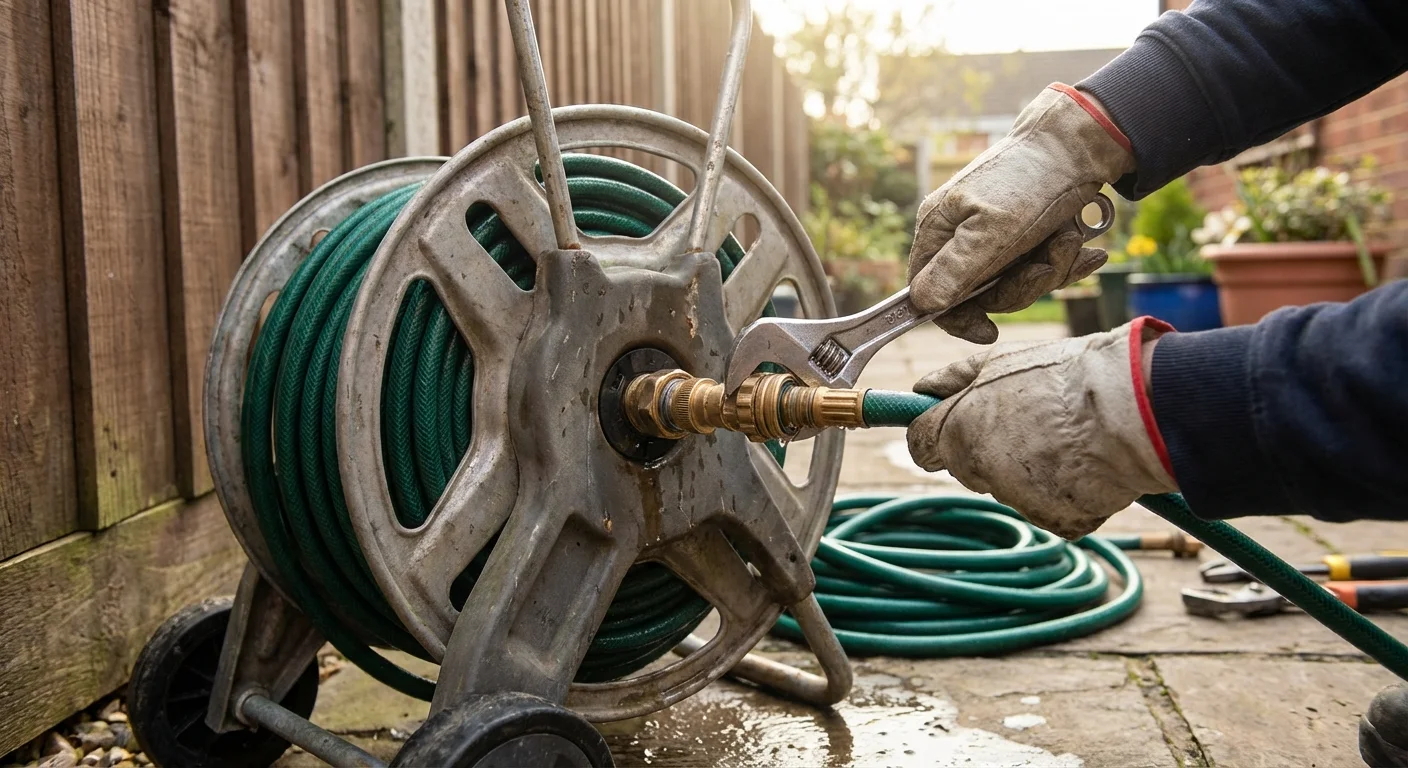

A hose reel that sprays at the fitting wastes water and soaks the wall. A reel that will not retract leaves hose all over the lawn. A dry hose with a sad trickle at the nozzle is a third problem — low flow — and it is not the same fix as a leak or a stuck rewind.
Most connection leaks are washers, loose threads, or a damaged hose end. Most “won’t retract” complaints are a lock still engaged, a kinked path, grit in the guide, too much hose on the drum, a stiff cold hose, or a tired spring. Most weak-spray complaints with dry fittings are a pinched hose, a half-closed valve or splitter, an undersized diameter for a long run, debris at a washer or screen, or an uphill stretch.
Best for: Homeowners who want to separate drip, sticky rewind, and weak spray before they replace the reel.
Not for: Opening the spring housing as a casual weekend project — stored rewind energy is a safety risk. Not for treating a half-closed splitter as a broken reel.
Retailer prices change. Use the check-current-price link rather than any dollar figure on this page.
Why do hose reels leak?
Pinpoint the wet spot before you buy parts. Common leak sources:
- Worn or damaged washers — Small rubber seals at connection points flatten, crack, or harden. This is the most common drip at faucet, leader, and inlet fittings.
- Loose or cracked fittings — Plastic or metal connectors loosen with use; cracked plastic leaks even when snug.
- Hose damage — A split or pinhole in the hose can look like a reel leak.
- Cross-threaded connections — A hose or leader started crooked leaves gaps on the threads.
- Internal seals on retractable reels — O-rings or seals inside the casing can degrade and weep into the housing.
Tools and materials
- Adjustable wrench or pliers
- Replacement rubber washers or o-rings (universal sizes fit many reels)
- Plumber’s tape (Teflon tape)
- Hose repair kit (if the hose itself is damaged)
- Clean cloth
Washer packs and tape are inexpensive hardware-store items — check current price rather than any dollar figure on this page. Many connection leaks clear once you replace the washer and reseat the fitting.
Step-by-step: fixing a leaky hose reel
Step 1: Identify the source of the leak
Turn on the water and watch. Is the drip at the faucet connection, the reel inlet, the nozzle end, or inside the reel casing? Mark the spot. That one observation saves a parts run for the wrong fix.
Step 2: Check the washers
Shut the water off and disconnect the hose. Inside most female connectors you will see a small black washer. If it looks cracked, flat, or brittle, replace it. Reseat the fitting and test again before you chase deeper problems.
Step 3: Tighten the connections
Hand-snug first. If needed, add a quarter-turn with pliers. Do not overtighten — that cracks plastic fittings and makes the next leak worse.
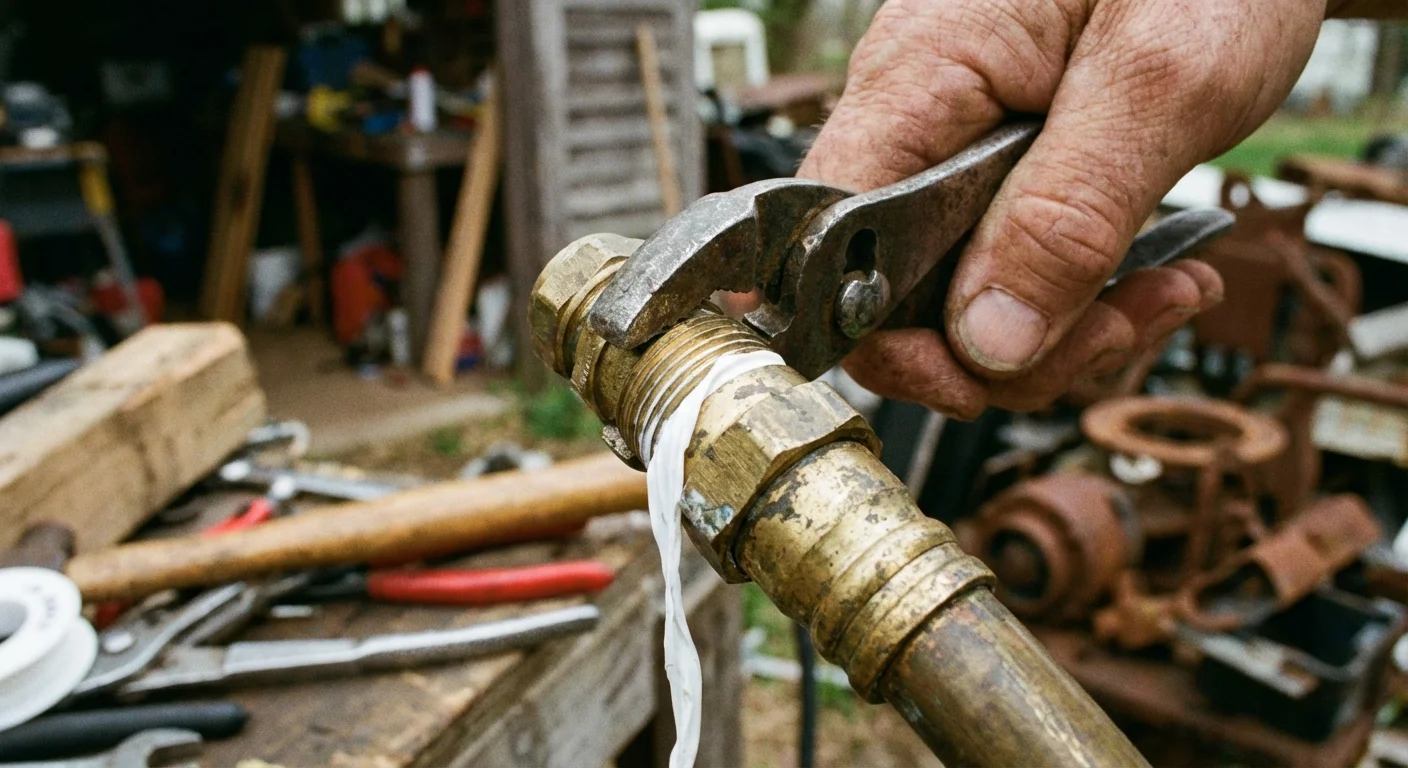
Step 4: Use plumber’s tape
If water sprays from metal threads, wrap the male threads with plumber’s tape — typically three to four wraps clockwise. Reconnect, hand-tighten, then a light wrench quarter-turn. Extra force alone rarely seals a bad wrap.
Step 5: Inspect the hose
A split or pinhole needs a hose repair coupling or a hose replacement — not a new reel. Cut out the damaged section when the kit instructions allow, seat the coupling, and retest.
Step 6: Check internal seals (casing weep)
If washers and fittings are dry but water still appears inside or from the housing, internal o-rings or seals may be worn. Some makers (for example Hoselink or Gardena) offer seal kits through the manufacturer — confirm for your model. Follow the product instructions. A casing weep is not permission to pry open the spring housing; seal service and spring service are different jobs, and the rewind spring stores energy.
Leak vs low flow vs won’t retract
| Symptom | Start here |
|---|---|
| Water at fittings, threads, or casing | Washers → tape → hose inspect → manufacturer seal kit |
| Dry fittings, weak or thin spray at the nozzle | Straighten kinks → open valves/splitters fully → check diameter vs run length → clean washer/screen → note uphill drag |
| Hose dry, will not rewind or rewinds weakly | Lock/pin → clear path → debris in guide → overfill → cold/stiff hose → spring / kit vs replace |
Fix the wet path first if a leak shows up with anything else. Guiding a leaking, locked, or jammed hose into the housing packs water and grit where you do not want them. A weak spray is not a retract problem, and a stuck rewind is not “low pressure.”
Weak nozzle flow / losing pressure
When fittings stay dry and the spray is still weak, work a short flow checklist.
- Kinks and crushed sections — Lay the hose out. A sharp fold can pinch flow without a visible spray leak. Straighten and retest.
- Valves, multi-hose junctions, and splitters — Open the spigot and every shutoff on the path. Test with one outlet open; split flow always softens each nozzle.
- Diameter vs run length — Longer, narrower hose adds friction loss. Matching diameter to the distance you water helps more than stretching a thin hose farther. Measuring and length class: how to choose the right hose length for your yard.
- Clogged washer, screen, or debris — Shut off, disconnect, rinse washers and any inlet screen on the reel or nozzle, replace a deformed washer, retest.
- Elevation / uphill runs — Raised beds and slopes add qualitative drag. Expect a weaker feel uphill than on flat ground; remove stacked restrictions before you blame the reel.
If the bare spigot is already weak with the hose disconnected, the limit may be supply or indoor demand — not the reel. Fix or confirm the source before you shop a replacement unit.
Preventing future leaks
- Drain before freezes — Trapped water expands when it freezes and can stress seals and fittings. Full shutoff / gravity-drain / store steps: how to winterize a hose reel.
- Replace tired washers each season — A fresh washer is cheaper than chasing drips all summer.
- Avoid overtightening — Hand-tight plus a light quarter-turn is usually enough.
- Shade when you can — UV ages hose jackets and many plastics; a cover helps after the system is drained.
- Prefer solid fittings — Brass connectors generally outlast brittle plastic at high-use joints.
FAQ
How do I know if my washer needs replacing?
If it looks flat, cracked, hard, or brittle instead of springy and rubbery, replace it. A worn washer is the most common cause of drips at hose and reel connection points.
Can I use universal washers?
Yes for most standard garden-hose fittings. Universal packs fit many reels and hoses. Some premium brands sell their own replacements — match size and shape to the fitting you have, or use the maker’s kit when the brand specifies one.
What if my reel leaks inside the casing?
That usually points to worn internal o-rings or seals, not a connection washer. Contact the manufacturer for a seal replacement kit when one is offered — often cheaper than replacing the whole reel. Follow the product instructions; do not force the spring housing open for a leak you have not diagnosed.
Why won’t my retractable hose reel retract?
Common causes are an engaged lock or pin, a kinked hose, debris in the guide, hose packed past the design length, a cold stiff hose after storage, or a tired rewind spring. Clear the path and release the lock before you blame the spring. Stop forcing the rewind if the hose will not move — forcing a stuck spring risks damage and injury.
Why is my hose reel hard to retract?
Hard retract often means drag, not a dead spring: lock still half-engaged, hose pulling around a corner, grit in the guide, overfilled drum, or a stiff hose after cold storage. Straighten the pull path, clear debris, and warm a cold hose indoors before another try. If it still will not rewind under light guidance, check whether a manufacturer repair kit exists — otherwise replacement may be the honest path.
Could the lock or pin be stopping retraction?
Yes. Many retractable reels use a tug-lock, locking collar, or side pin. If the lock is engaged, the hose will not rewind. Give the short release tug or open the lock per the manual, then guide the hose in. Do not yank harder against a locked mechanism.
Do kinks and pull angle stop a hose from retracting?
Often. A kink, bed edge, chair leg, or hard corner creates drag the spring cannot overcome. Clear the path and pull in a straight line toward the reel so the guide is not grinding. Use a swivel mount when you water around corners — see how to install a retractable hose reel for placement.
Can debris in the hose guide stop retraction?
Yes. Mud, mulch, pebbles, and grass in the guide or drum path bind the hose. Shut water off, wipe the guide and visible drum path, and clear grit before you rewind. Retracting a dirty wet hose packs debris deeper into parts you cannot see.
What if I put too much hose on the reel?
Overfilling past the design length packs the drum so layers bind and retraction stalls. Stop winding when the hose sits below the frame or housing lip. If the hose is longer than the reel was built for, shorten the hose, use a different reel class, or switch to a garden hose reel cart sized for that length.
When is spring fatigue a repair-kit job vs a replace?
If lock, path, debris, overfill, and cold/stiff hose are ruled out and rewind is still weak or dead, the spring may be worn. Some makers sell rewind or seal kits — check the manufacturer for your model. Check the manufacturer’s instructions for spring specs, and do not open the spring housing casually; stored energy is a safety risk. If no kit exists or rewind stays unsafe, replacing the reel is the honest call. Shopping next units: best retractable hose reel or best 100 ft retractable hose reel.
Can a cold or stiff hose after storage stop retraction?
Yes. Hose left outdoors or in a freezing garage can stiffen and fight the rewind. Bring the hose and reel above freezing, let the jacket soften, then try a guided retract. For drain and store steps before the next freeze, see how to winterize a hose reel — do not skip drain and expect the spring to fix trapped-water damage. That winterize page is the source of truth for shutdown steps; this page only cross-links it.
Why is my hose nozzle flow weak even when nothing is leaking?
Weak spray without wet fittings is usually a flow path problem, not a leak. Common causes: a kink or crushed section, a partially closed spigot or splitter valve, an undersized diameter for a long run, a clogged washer or screen at a fitting, or an uphill run that adds drag. Work those in order before you replace the reel.
Can a kink or crushed hose cut flow without a visible leak?
Yes. A sharp fold can pinch the inner channel so water still dribbles through while nozzle pressure feels weak. Lay the hose out straight, walk the length, and feel for a flat or soft spot past a sharp bend. Straighten it and retest before you chase washers or buy a new reel.
Could a partially closed valve or splitter be starving the nozzle?
Yes. A multi-hose junction, Y-splitter, or shutoff on a leader hose often sits half-closed after the last watering. Open every valve fully on the path from spigot to nozzle, then retest with only one outlet open. Split flow across two hoses always reduces what each nozzle gets.
Does hose diameter and run length reduce pressure?
Qualitatively yes — longer runs and narrower diameters add friction loss inside the hose, so the nozzle feels weaker even when the spigot and fittings are fine. Matching diameter to the distance you actually water helps more than buying a longer thin hose. For measuring reach and length class, see how to choose the right hose length for your yard. No dollar or PSI figure on our pages is a lab result.
Can a clogged washer, screen, or debris at fittings cut flow?
Yes. Grit, mineral scale, or a deformed washer can seat off-center and throttle flow without a dramatic spray leak. Shut water off, disconnect fittings, and check washers and any inlet screen on the reel or nozzle. Rinse debris, reseat or replace a damaged washer, then retest.
Does elevation or an uphill run reduce hose flow?
Uphill runs and raised beds add qualitative drag — the same spigot feels weaker at the high end of a slope than on flat ground. That is expected physics, not always a failed reel. Shorten the vertical climb when you can, avoid stacking extra restrictions (kink + half-closed splitter + long narrow hose), and retest on the flat if you need a fair comparison.
Is my problem a leak, low flow, or won’t-retract?
Water at fittings, threads, or the casing is a leak path — start with washers, tape, and seals. A dry hose with a weak nozzle is a flow path — kink, valve/splitter, diameter vs length, clogged washer/screen, or elevation. A dry hose that will not rewind is a retract-path problem — lock, path drag, debris, overfill, cold hose, or spring. Fix each path separately; do not force a jammed rewind or replace the reel for a half-closed splitter.
Related reading
- How to Choose the Right Hose Length for Your Yard
- How to Winterize a Hose Reel
- How to Install a Retractable Hose Reel
- How to Install a Wall-Mounted Hose Reel
- Best Retractable Hose Reel
- Best 100 ft Retractable Hose Reel
- Garden Hose Reel Cart
- Buyers Guide
- Disclosure
Final thoughts
A leaky hose reel is usually a washer, a loose fitting, or a tired seal — not an automatic full replacement. A reel that will not retract is usually a lock, a bad pull path, debris, overfill, cold hose, or a spring that has reached end of life. A weak spray with dry fittings is usually a kink, a half-closed valve, diameter vs length, debris at a fitting, or uphill drag. Work the matching list. Stop forcing the spring when the hose will not move.
Still choosing a retractable? Start with best retractable hose reel. Matching a longer listed length: best 100 ft retractable hose reel. Sizing length and thinking about flow over distance: how to choose the right hose length for your yard. Before the first hard freeze: how to winterize a hose reel.